

Flagstaff has earned a distinction that no other city in the world can claim: it was the first to be certified an International Dark Sky City. That title matters for two entirely different audiences. For travelers, it means a night sky that routinely reveals the Milky Way, naked-eye galaxies, and meteor showers from sites that are fifteen minutes from a restaurant on Route 66. For short-term rental owners, it means a documented demand driver that fills calendars across multiple seasons and supports a specific, searchable type of guest booking. This guide covers both sides of that equation fully.
Flagstaff and the Dark Sky City Designation: The Full Picture
When the International Dark-Sky Association certified Flagstaff as the world’s first Dark Sky City in 2001, it was formalising a commitment the city had already held for decades. Flagstaff’s outdoor lighting ordinance dates to 1958, put in place specifically to protect the research capabilities of Lowell Observatory and the US Naval Observatory Flagstaff Station, both of which have operated near the city since the late 19th and mid-20th centuries. The result is a city of nearly 80,000 people where light pollution is actively regulated, where shielded, warm-spectrum outdoor lighting is the standard rather than the exception, and where the night sky overhead is treated as a public resource worth protecting by municipal code.
At 7,000 feet above sea level on the Colorado Plateau, Flagstaff also benefits from low humidity, high atmospheric transparency, and more than 300 clear nights per year. These conditions combine to produce a night sky quality that most Americans would have to drive hours into genuine wilderness to find. Flagstaff delivers it within city limits.
For owners of Flagstaff vacation rentals, that last figure is the one worth underscoring. The “flagstaff stargazing” keyword cluster carries a traffic potential of over 11,000 monthly visits at a keyword difficulty of just 10 out of 100. That is an unusually strong ratio in any travel market, and it represents a pool of guests actively searching for exactly the experience Flagstaff’s regulated night sky provides. The question for owners is whether their property and listing are positioned to capture that demand. The sections below address both the guest experience and the owner strategy in full.
Best Stargazing Spots in and Around Flagstaff
Understanding where guests actually want to go for Flagstaff stargazing is essential context for owners positioning their properties. These are the locations visitors consistently search for and plan around.
-
1 Lowell Observatory Top Guest Request
Founded in 1894 and the site of Pluto’s discovery, Lowell Observatory runs public telescope programs nightly and is the single most searched stargazing destination in Flagstaff by name. It books in advance, particularly on weekends and during summer. For owners, proximity to Mars Hill Road is a listing advantage worth calling out by name. Guests who book stargazing trips often plan their itinerary around a Lowell visit and want accommodation within easy distance.
-
2 Marshall Lake Milky Way Photography
Twelve miles southeast of downtown via Lake Mary Road, Marshall Lake is an open meadow site with minimal horizon obstruction and a clear southern view toward the Milky Way core. It draws astrophotographers and serious amateur astronomers who prefer self-guided sessions over the observatory experience. The surrounding area is Coconino National Forest land, accessible and well-trafficked by the stargazing community.
-
3 Buffalo Park Walkable from Midtown
An open meadow on the northeast edge of the city with a clear eastern sky exposure. For guests staying in the midtown area, it is often the first stargazing stop because it requires no driving and no equipment. On new-moon nights in summer, the Milky Way is visible from the meadow with no optical aids. Properties within a short walk or drive of Buffalo Park can use this as a direct amenity callout in their listing narrative.
-
4 Schultz Pass Road Best Dark Skies Near City
Climbing above 8,000 feet between Mount Elden and the San Francisco Peaks through Coconino National Forest, Schultz Pass Road puts observers at an elevation where atmospheric transparency improves measurably over the city floor. The site is self-guided, free to access, and consistently dark. For guests with binoculars or a portable telescope, it is the recommended first choice beyond the observatory.
-
5 Fort Valley Corridor (Hwy 180) Low-Effort, Dark Northwest View
Northwest of downtown along the highway toward the San Francisco Peaks, the Fort Valley corridor moves visitors away from Flagstaff’s light dome quickly. Pull-outs and cleared forest areas offer open sky access within fifteen minutes of central properties. Properties near the north and west sides of Flagstaff often have the Fort Valley corridor as their most convenient dark sky access, which is worth noting in listing descriptions for the right audience.
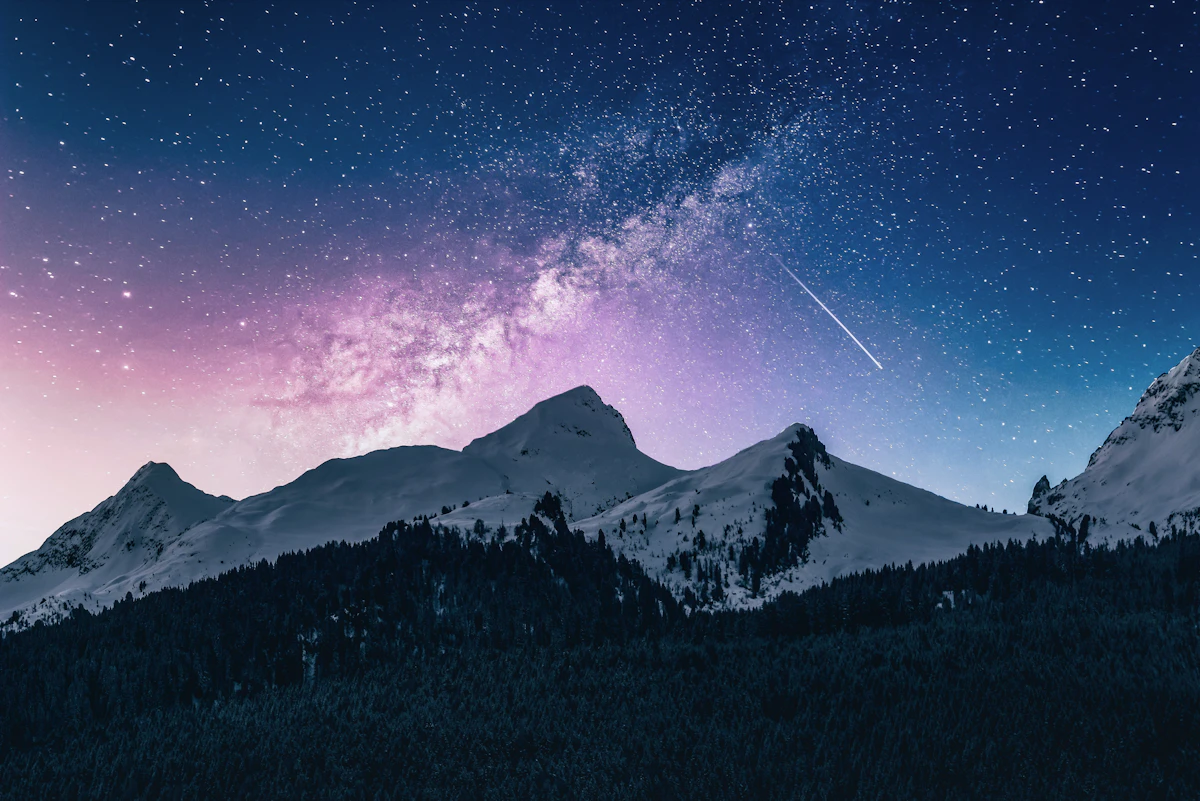
The Milky Way core is visible to the naked eye from multiple sites within 15 minutes of downtown Flagstaff on new-moon nights from June through September.
Dark Sky as a Revenue Driver: What the Data Shows
Flagstaff’s dark sky designation is not a niche amenity for a small subset of guests. It is a primary demand signal for a growing category of travelers who are specifically choosing their destination based on night sky access. Understanding the demand pattern helps owners price, market, and position their properties more precisely.
When Dark Sky Guests Book
What Dark Sky Guests Search For in Listings
Guests booking a Flagstaff property specifically for the night sky experience are searching with intent terms that differ from standard vacation rental queries. The most commonly used listing signals that capture this audience include: “dark sky cabin,” “stargazing from the hot tub,” “Milky Way views,” “no light pollution,” and “private outdoor space for stargazing.” Properties that include these terms naturally in their listing narrative, amenity lists, and photo captions perform meaningfully better in platform search for this segment than comparable properties that do not.
The Revenue Benchmarks That Matter
In Flagstaff’s STR market, the properties that earn at the high end of their category are not simply the newest or the largest. They are the ones with documented, searchable outdoor experiences. A property with a hot tub, an open deck with minimal overhead obstruction, and a listing that explicitly calls out the stargazing opportunity commands a rate premium relative to comparable properties without those elements, both in average daily rate and in occupancy during the shoulder seasons when outdoor experience is the primary booking driver. The Flagstaff STR revenue guide for 2026 covers the full market benchmark picture, including how amenities stack against ADR across property tiers.
Property Features That Drive Dark Sky Revenue Premiums
Not every outdoor amenity contributes equally to a property’s ability to capture the stargazing audience. The features below are consistently correlated with higher occupancy and rate performance among dark sky travelers in Flagstaff’s market.
The highest-value single amenity in the Flagstaff STR market, and doubly effective for the stargazing audience. A guest lying back in a hot tub under a clear Flagstaff sky is the core experience many dark sky travelers are explicitly looking for. Properties with hot tubs appear in the search filters most stargazing guests apply first.
Highest Rate ImpactA fire pit extends the outdoor evening well past the temperature drop that cuts a Flagstaff night short for unprepared guests. It also provides a natural gathering point for groups doing casual stargazing. Properties that combine a fire pit with a clear sky view consistently outperform in group bookings during the Perseids and Geminids windows.
Strong Group AppealAn unobstructed sky view from the property itself is the differentiating feature that lifts a stargazing property from “convenient to dark sites” to “the experience is here.” A deck with a clear overhead view, reclinable outdoor seating, and no low-hanging tree cover over the primary sitting area is worth calling out explicitly in the listing description and highlighting with a night photo.
Key Listing DifferentiatorA property whose outdoor lighting is fully shielded, directional, and warm-spectrum can truthfully market itself as “dark sky compliant.” For guests who are serious about stargazing, this signals that the property will not wash out its own night sky with poorly aimed floodlights or cool-spectrum security lights. It is a small operational detail with meaningful marketing value for the right audience.
Niche Differentiator
Properties with open outdoor spaces and minimal artificial light overhead give guests a genuine dark sky experience without leaving the rental. This is the amenity combination the stargazing guest segment specifically books around.
Flagstaff’s Dark Sky Lighting Ordinance: What STR Owners Must Know
Flagstaff’s outdoor lighting regulations are codified in the city’s Dark Sky Code, administered through the City of Flagstaff Dark Sky Program. For short-term rental owners, these rules are both a compliance obligation and, when understood correctly, a competitive advantage.
- All outdoor fixtures must use full cutoff (shielded) design directing light downward only
- Lamp color temperature must not exceed 3,000 Kelvin (warm white or amber tones)
- Commercial signage and decorative lighting must be extinguished or reduced after 11 pm
- Floodlights illuminating vertical surfaces (walls, trees, facades) are prohibited on most properties
- New and replacement fixtures must meet current code specifications at time of installation
- Audit all exterior fixtures and replace non-compliant bulbs before each guest season
- Use motion-activated, shielded path lighting rather than always-on perimeter floods
- Mention “dark sky compliant outdoor lighting” in your listing amenity list
- Add a red-light headlamp to your guest welcome kit, specifically for stargazing
- Note the nearest dark site by driving time in your guest guidebook
STR owners who receive a noise or nuisance complaint from a neighbor can face elevated scrutiny on their license renewal. While outdoor lighting complaints are less common than noise complaints, a property with non-compliant fixtures and a neighbor who knows the city’s dark sky ordinance creates an avoidable compliance exposure. More practically, a property that inadvertently flood-lights its own backyard reduces the very stargazing quality that the city’s regulations are designed to protect and that the guest paid to experience.
For a complete overview of Flagstaff’s STR permitting and compliance requirements, the Flagstaff STR permit compliance checklist covers the full regulatory picture, including the city licensing requirements at flagstaff.az.gov.
How to Position Your Listing for the Stargazing Audience
Optimising a Flagstaff STR listing for dark sky travelers does not require a separate marketing strategy. It requires weaving verified, specific language into the places platform algorithms and guest searches already look: the title, the first paragraph of the description, the amenity tags, and the photo captions.
Language That Converts for This Audience
The following phrases are high-signal for guests searching specifically for a stargazing-oriented stay. Use them where they are factually accurate for your property.
- “Milky Way visible from the property” if your outdoor space has a clear southern horizon with minimal obstruction
- “Dark sky cabin” or “dark sky home” in the listing title if your outdoor lighting is fully compliant
- “Stargaze from the hot tub” if you have a hot tub and a clear overhead view, this phrase directly answers the single most common search intent in this segment
- “Minutes from Lowell Observatory” as a proximity callout, regardless of how guests are oriented toward the night sky
- “300+ clear nights per year” as a destination fact that anchors the stargazing promise in something verifiable
- “Perseids viewing” or “meteor shower” as seasonal callouts in availability descriptions or house notes during August
The One Photo Most Listings Are Missing
A single night photograph of your outdoor space with the sky visible overhead does more to communicate the stargazing experience than any amount of descriptive copy. It does not need professional astrophotography equipment. A smartphone on a tripod with a ten-second exposure in night mode, taken during a clear new-moon period, produces an image that communicates the property’s night sky access directly. Properties with this photo in their gallery rank above comparable properties without it in search result click-through rates for dark sky queries.
Revenue Context for Dark Sky Properties
Owners evaluating whether to invest in outdoor dark sky amenities should read the Flagstaff property management fees guide alongside the revenue benchmarks, as the management structure you choose directly affects whether stargazing-driven rate premiums flow back to you net of fees. A manager who actively updates listing content for seasonal events like the Perseids will capture more of that demand than one operating on a static listing template.
Seasonal Revenue Calendar: Matching the Sky to the Booking Window
Flagstaff’s dark sky demand does not run on a single season. It follows the astronomical calendar, which means a well-positioned property can draw stargazing intent guests across all four seasons rather than treating the night sky as a summer-only feature.
| Season | Sky Highlight | Booking Driver | Owner Opportunity |
|---|---|---|---|
| Summer (Jun to Sep) | Milky Way core, Perseids (Aug 11 to 13) | Astrophotography, couples retreats, family science trips | Highest rates of the year; dark sky positioning reinforces existing peak demand |
| Fall (Sep to Nov) | Andromeda Galaxy, early Orion rising, Leonids (Nov) | Shoulder season couples, photography guests avoiding summer crowds | Dark sky demand fills gaps where general tourism softens; fire pit becomes key |
| Winter (Nov to Feb) | Orion Nebula, Pleiades, Geminids (Dec 13 to 14), long nights | Ski plus stars crossover guests, clear-night seekers in cold-weather gear | Winter dark sky guests are high-intent and often book longer stays; pairs with Snowbowl access |
| Spring (Mar to May) | Galaxy season begins, Lyrids (Apr), exceptional transparency | Serious amateur astronomers avoiding summer heat; photography retreats | The Flagstaff summer adventure window begins; dark sky adds a reason to book before peak rates kick in |
A significant segment of Flagstaff’s dark sky bookings are couples seeking a specific kind of evening that is difficult to manufacture in a city environment. Stargazing from a private hot tub, sitting around a fire pit under the Milky Way, or walking to a meadow with a blanket and a bottle of wine are experiences that read as romantic to a large audience without requiring special equipment. The Flagstaff couples guide covers how this audience books and what they specifically look for in a property.

With over 300 clear nights a year and strict lighting regulations in place since 1958, Flagstaff’s night sky is a year-round asset for both guests and property owners who know how to position it.
Frequently Asked Questions
Is Flagstaff actually the world’s first Dark Sky City?
Yes. In 2001, the International Dark-Sky Association (now DarkSky International) awarded Flagstaff its founding International Dark Sky City designation, making it the first city in the world to receive that status. The designation recognises Flagstaff’s outdoor lighting ordinances, astronomical heritage, and commitment to reducing light pollution, all of which remain actively enforced through city code today.
Can you see the Milky Way from Flagstaff?
Yes, with the right timing. During the new moon in July and August, the Milky Way core is visible to the naked eye from open sites within a fifteen-minute drive of downtown Flagstaff. From sites like Marshall Lake or Schultz Pass Road, the galactic band is a fully resolved structure stretching across the sky. For STR owners, this is a factual and specific claim that can be accurately included in listing descriptions for properties with appropriate sky access.
Do Flagstaff STR owners have to comply with the dark sky lighting ordinance?
Yes. Flagstaff’s outdoor lighting code applies to all properties within city limits, including short-term rentals. The core requirements cover fixture type (full cutoff, shielded), color temperature (3,000K maximum), and restrictions on upward-directed light and decorative signage illumination after 11 pm. Non-compliant outdoor lighting at an STR property can generate neighbor complaints and create compliance complications at license renewal. Full details are available through the City of Flagstaff’s STR Property Owners portal.
Does marketing a property as “stargazing-friendly” actually affect bookings?
For properties with the right outdoor features, yes. The “flagstaff stargazing” keyword cluster carries a documented traffic potential of over 11,000 monthly searches at very low competition. Guests who book around the dark sky experience are also higher-intent, often willing to pay above the market average to secure a property that specifically matches their purpose. Properties that explicitly position for this audience in their listing title and description capture a meaningful share of that demand that identical properties without the language miss entirely.
What is the best time of year for stargazing in Flagstaff?
Summer, specifically July and August during new-moon windows, offers the peak experience due to the Milky Way core’s position and the Perseids meteor shower. Winter provides the longest nights and some of the clearest atmospheric conditions of the year, making it excellent for deep-sky objects like the Orion Nebula. Spring and fall are strong shoulder options with minimal monsoon risk and cooler temperatures than peak summer. For owners, recognising that each season has a distinct sky feature allows for targeted marketing throughout the year rather than treating stargazing as a single-season sell.
Where can guests go stargazing near Flagstaff without a telescope?
Buffalo Park and Fort Valley pull-outs are accessible without equipment and require no hiking. Marshall Lake is a short drive and offers a flat, open meadow ideal for naked-eye viewing. Lowell Observatory’s public star parties provide guided telescope sessions for guests who want a structured experience. For completely self-guided, naked-eye Milky Way viewing, the new-moon window from any of these sites in July or August requires nothing beyond dark-adapted eyes and a reclinable position.